Property
How Much Rent Is Too Much? The 30% Rule in Practice
Detroit renters are being squeezed harder than the old income threshold suggests, and the math is starting to break down across the city.
4 min read
Property
Detroit renters are being squeezed harder than the old income threshold suggests, and the math is starting to break down across the city.
4 min read
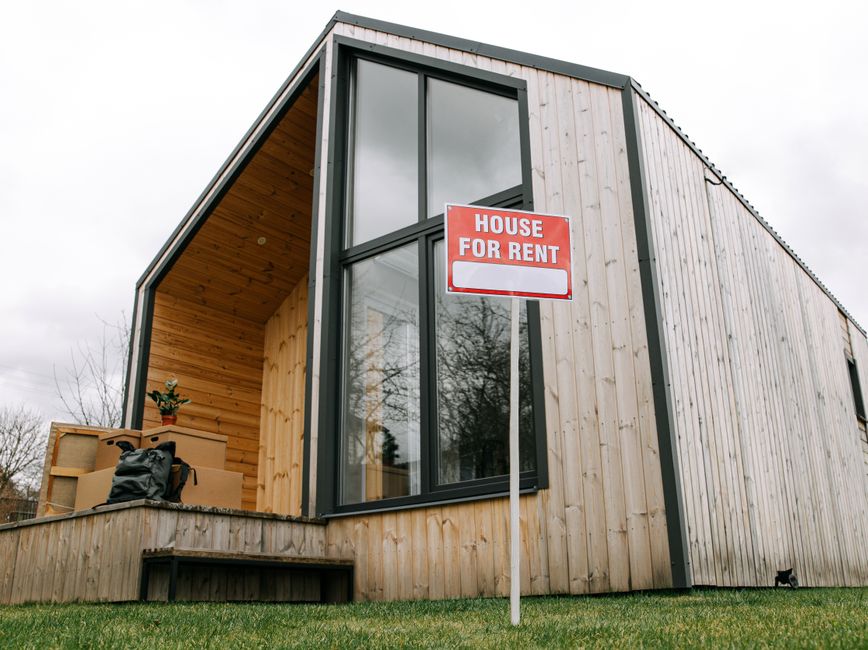
More than half of Detroit renters are now spending above 30 percent of their gross income on housing costs, according to data compiled through early 2026 by the National Low Income Housing Coalition — a threshold economists have used since the 1980s to define affordability. In a city where the median household income hovers around $38,000 a year, that translates to a monthly rent ceiling of roughly $950. The average two-bedroom in Detroit is currently listing at $1,175.
That gap matters right now because the rental market is tightening in ways it hasn't in years. Vacancy rates in neighborhoods like Midtown and Corktown have dropped below 4 percent, landlords are pushing annual increases of 8 to 12 percent on renewals, and the federal emergency rental assistance that kept thousands of Detroit households stable between 2021 and 2023 has long since dried up. The 30 percent rule, baked into federal housing policy and used by the Detroit Housing Commission to set income thresholds for assistance programs, is increasingly out of step with what people are actually facing.
The 30 percent benchmark was codified in the Brooke Amendment to the Housing Act of 1969, originally designed to cap what public housing tenants paid. It was never intended as a universal measure of affordability. Critics have long argued it ignores geography, household size, and fixed costs like childcare and transportation — all of which bite harder in Detroit than the number alone suggests.
Take a renter on East Jefferson Avenue paying $1,050 a month for a one-bedroom. On $38,000 gross income, that's 33 percent — technically over the line, but not by enough to qualify for many assistance programs. Add a $180 monthly DDOT bus pass, $300 in childcare, and utilities averaging $140 in summer months, and the picture shifts dramatically. Housing counselors at Southwest Housing Solutions on Vernor Highway say they regularly work with clients whose total shelter burden, including utilities, exceeds 45 percent of take-home pay — not gross income, but what actually hits the bank account.
The Detroit Housing Commission's current affordable housing programs use 30 percent of Area Median Income as a qualifying threshold. For a single-person household in Wayne County, that AMI figure for 2025 was set at $52,400. A unit is deemed "affordable" if rent doesn't exceed $393 a month at 30 percent AMI, or $786 at 60 percent AMI. Those numbers bear little relationship to what's available on the open market in neighborhoods like North End or Woodbridge, where renovated units regularly list above $1,400.
For some Detroiters, buying is starting to look more rational despite mortgage rates that remain above 6.5 percent. The Detroit Land Bank Authority has sold more than 200 properties through its Own It Now program in the first half of 2026, with purchase prices on the lower end ranging from $12,000 to $45,000 in neighborhoods like Osborn and Bagley. A buyer financing $40,000 at 6.75 percent over 30 years pays roughly $260 a month in principal and interest — well inside the 30 percent threshold even for low-income earners. The problem is the rehab costs, which frequently double or triple the actual ownership expense.
The Detroit 0% Home Repair Loan Program, administered through the city and funded partly through federal Community Development Block Grant dollars, offers up to $25,000 in interest-free loans for qualifying homeowners. It doesn't help renters at all. That asymmetry — public investment disproportionately flowing toward ownership — is part of what keeps the renter population stuck.
Housing advocates recommend renters who are pushing above the 30 percent threshold start by contacting Michigan Legal Help or the United Community Housing Coalition on East Grand Boulevard, both of which offer free counseling on lease rights and assistance eligibility. Anyone considering a purchase through the Land Bank should budget a minimum of $30,000 above the acquisition price for repairs before moving in. The 30 percent rule remains a useful starting point — it just shouldn't be the last word.
Property
Property
Property
Property
About this article
Published by The Daily Detroit
Spread the word
Daily brief
Free, in your inbox before 7am. Weekdays.
The Daily Network — local news across Australia